 HackHPC@ADMI26
HackHPC@ADMI26
HackHPC@ADMI26
The Association of Computer Science Departments at Minority Institutions (ADMI) Hackathon will take place virtually from June 22–26, 2026. Teams will focus on applying advanced computational analysis skills to deconstruct the architecture of human knowledge, as an extension of the ADMI 2026 Symposium on Computing at Minority Institutions theme, "Fine-Tuning AI Models." Pre-training activities covering graph theory, natural language processing, and causal inference have been provided in coordination with the 2026 Virtual Coding Institute.
HackHPC@ADMI26 is a five-day virtual hackathon focused on deconstructing the architecture of human knowledge. Using Wikipedia as a massive knowledge graph, teams will leverage advanced computational techniques to analyze the past, predict the future, and simulate alternative realities.
The event follows a collaborative model of project development, iterative feedback, and afternoon troubleshooting support to keep teams on track. Participants will move beyond "black box" solutions, building deep, graph-based applications that uncover the "how" and "why" behind the information we consume.
Explore the work from previous hackathons in the HackHPC@ADMI series.
Click a team card to view their full profile

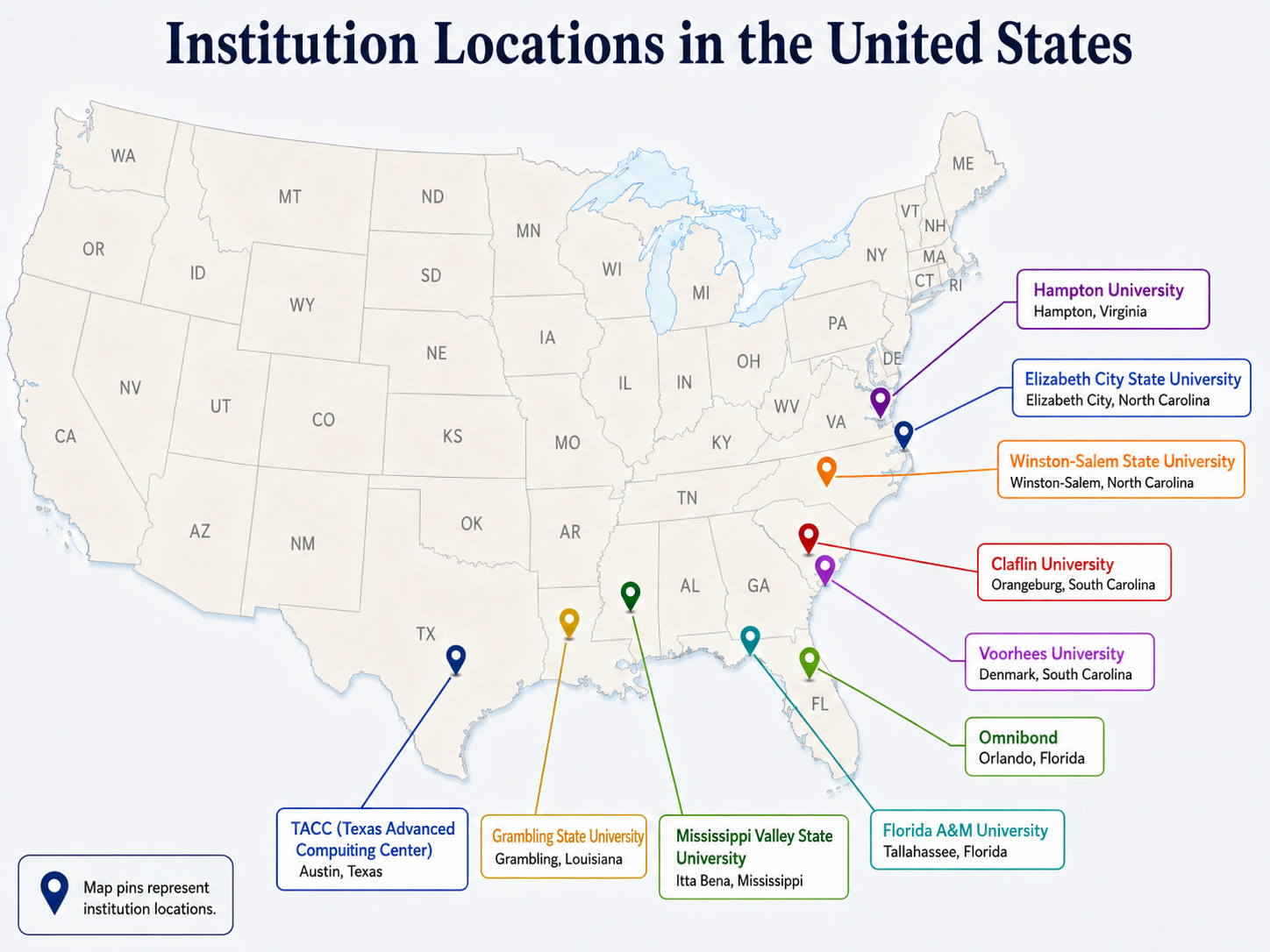
This year’s hackathon is about exploring how knowledge is connected. Teams will use Wikipedia like a giant map of information. Each topic is like a point on the map, and links between topics show how ideas, people, places, events, and discoveries are connected.
Teams will choose one of three project tracks.
This track is about finding where an idea, event, invention, or topic may have started.
Your team will choose a topic and follow the links backward to find the people, events, discoveries, or ideas that helped create it. The goal is to explain the “origin story” of a topic using data and connected information.
Think of it like asking:
Marvel Example: This is like tracing how the Avengers came together. Instead of only starting with the first Avengers movie, you would look backward at Iron Man, Captain America, Thor, S.H.I.E.L.D., the Tesseract, and Loki to explain what events made the Avengers possible.
This track is about using past patterns to make a smart prediction about what could happen next.
Your team will study how a topic has changed over time. You might look at connected ideas, important events, repeated patterns, or new words that are becoming more important. Then your team will make a prediction about what might happen next and explain why.
Think of it like asking:
Marvel Example: This is like watching the early MCU movies and predicting that a major villain like Thanos would eventually become important. You would notice clues like the Infinity Stones appearing in different stories and use those clues to predict a bigger future event.
This track is about imagining how things might have changed if one important event happened differently.
Your team will choose a goal or outcome and study what events, people, tools, or ideas were needed to make it happen. Then you will explore what might change if one of those key pieces was missing or different.
Think of it like asking:
Marvel Example: This is like asking, “What if Tony Stark never became Iron Man?” Your team would explore what events might change after that. Would the Avengers still form? Would S.H.I.E.L.D. find another leader? Would Earth be ready for Loki or Thanos? The goal is to explain what changes and why.
Participants will apply a powerful stack of computational tools explored throughout the event:
The final team deliverables provide the foundation for judging the major HackHPC@ADMI26 awards. The GitHub repository, README, source code, and project documentation will help judges evaluate the technical depth, clarity, and analytical approach behind each team’s work, especially for the Knowledge Graph Analytics Award. The website, visualization, or application will support judging for the Knowledge Portal Award by showing how effectively each team communicates their findings and helps users explore their chosen innovation track. The final presentation, project poster, and overall integration of the team’s work will be used to evaluate the Gateways Impact Award, which recognizes the project that best combines creativity, technical execution, communication, and alignment with this year’s hackathon theme. Teams that provide proof of poster submission to Gateways 2026 will also receive an additional 5 points toward their judging score.
Each team must complete and submit the following deliverables before their final presentation on the last day of the hackathon.
Each team must maintain a GitHub repository that includes:
Each team must submit a project poster in PDF format.
Each team must submit a final presentation in PDF format. The presentation should include:
Each team must provide a website, visualization, or application that demonstrates their project idea and findings.
Each team should provide evidence that their project poster was submitted to Gateways 2026.
Note: Teams that submit proof of poster submission to Gateways 2026 will receive +5 points added to their judging score.
 SGCI
SGCI